What is an Islamic swimsuit?
The short answer
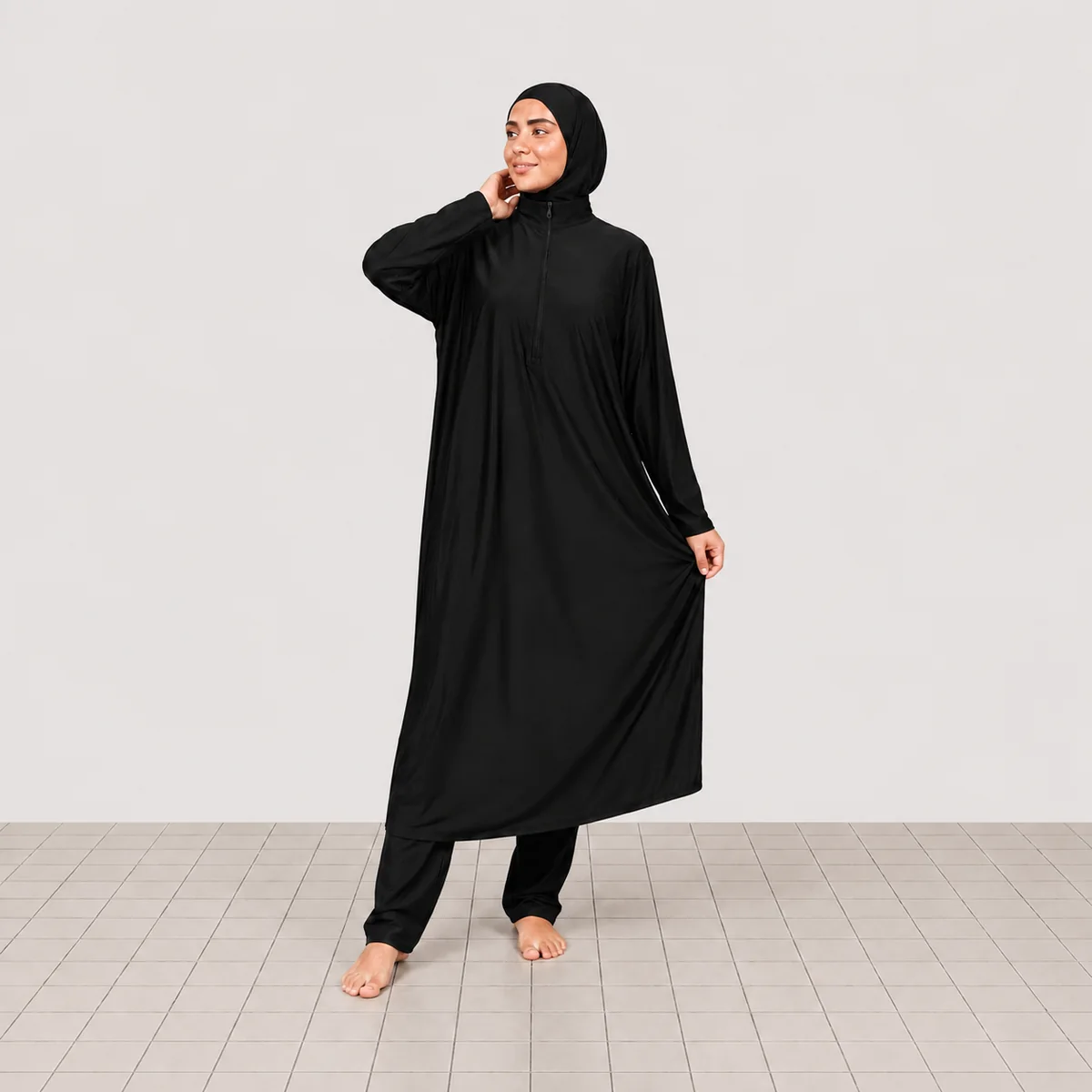
An “Islamic swimsuit” is swimwear that covers the body and hair, also called a burkini. Its criteria follow the conditions of dress scholars describe: it covers, it is loose and it is not see-through — and in the water, it must not cling once wet.
What people mean by it
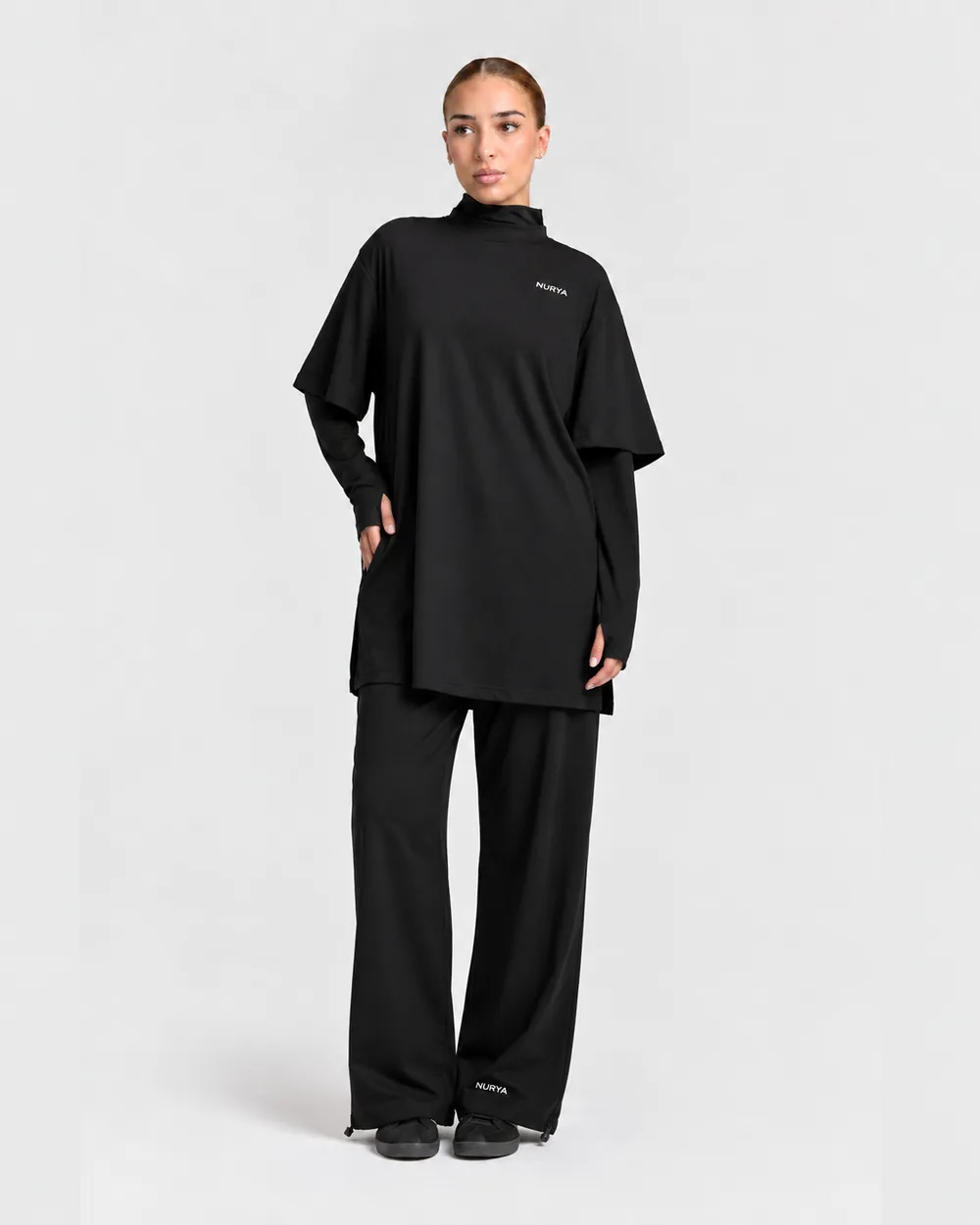
It is swimwear covering the whole body and the hair, usually a long tunic, trousers and a hood. It is also called a burkini, a Muslim swimsuit or a swim jilbab — the same garment.
Criteria drawn from the conditions of dress
Scholars set general conditions for a woman’s clothing; from them come the requirements for swimming:
- Covering: a long tunic reaching at least the hips, trousers and a hood.
- Loose: a cut that doesn’t show the shape of the body.
- Opaque: the most important test in the water, which reveals thin fabric.
- Not an eye-catching adornment in itself.
What water changes
Fabric that covers when dry can cling and turn see-through when wet. That’s why an Islamic swimsuit is made of swim fabric that doesn’t absorb water, in a relaxed cut that leaves space between fabric and body.
What about where you swim?
Questions about swimming venues and mixed settings are discussed in detail by scholars; we don’t cover them here. For a personal question in Morocco, the local councils of ulema answer them.
Frequently asked questions
Is a burkini the same as an Islamic swimsuit?
In everyday use, yes: both mean swimwear that covers the body and hair.
What should I check first?
That it stays opaque when wet, doesn’t cling, has a long tunic and a hood that stays in place.
Does it have to be black?
No. The texts set no colour; the condition is that it isn’t an eye-catching adornment in itself.
Sources
This article explains the term and the practical criteria; it is not a fatwa.